2026-09-29T13:38:13.518Z ·
Slab Leak: Spot Repair or Reroute?
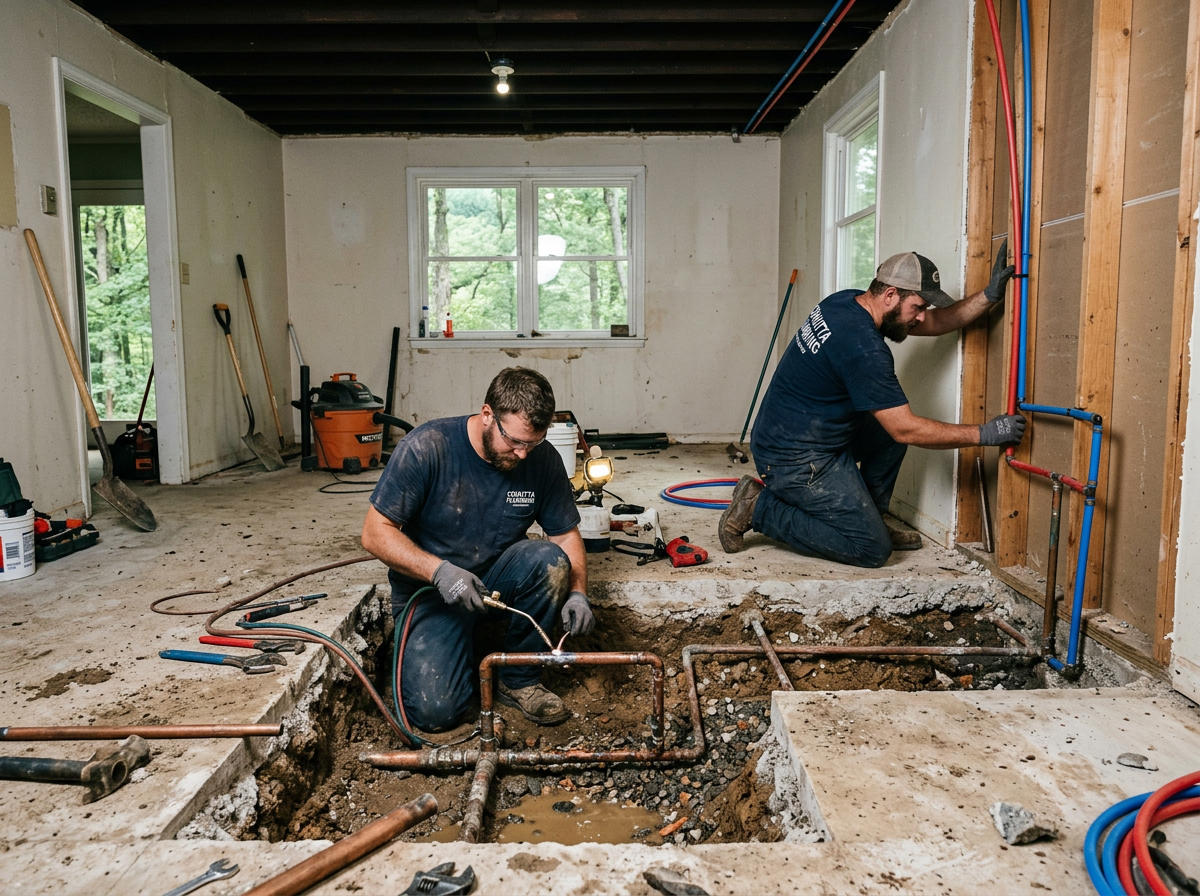
Once a slab leak has been located, the next question is how to fix it. There are two main approaches, and the right one depends on the house, the pipe and how many leaks you have already had. Here is how they compare, so you can have a clear conversation with the plumber.
Option 1: Spot repair through the slab
A spot repair goes straight to the leak. The plumber marks the exact spot, the flooring is lifted along clean lines, and a small section of concrete is cut out to reach the pipe. The damaged section is replaced, the line is pressure-tested, and the opening is backfilled and patched.
The concrete side of that work is covered in more detail in concrete slab breaking and repair.
When a spot repair makes sense:
- It is the first leak on that line.
- The pipe is relatively new, or the rest of it is in good condition.
- The leak is somewhere that is reasonable to open, not under a cabinet run or a large tiled area.
The trade-offs: a spot repair fixes today's leak but leaves the rest of the old line in place. If that line is decades old and has been wearing against the concrete, another leak somewhere else along it is possible.
Option 2: Reroute the line above the slab
A reroute leaves the old pipe where it is and takes it out of service. A new line is run above the slab instead: up into the attic, across, and down inside the walls to each fixture. The floor is not opened at all.
We explain the process in more detail on our slab leak repiping and reroute page.
When a reroute makes sense:
- This is the second or third leak on the same line.
- The home is older and the line under the slab is original copper.
- The leak is under tile, hardwood or cabinets that would be expensive to lift.
- You want the line accessible for the future.
The trade-offs: a reroute involves small access openings in walls and ceilings along the route, which are patched afterwards. It is more work than a single spot repair, but the old line under the slab can no longer leak into the floor.
A third option: trenchless repair
Depending on the pipe route, some leaks can be reached with minimal concrete removal: by pulling a new line through the old path, or by tunnelling under the foundation from outside. Whether that is possible is decided after the leak is located. See trenchless slab leak repair.
What decides it for your home
- Pipe age and material. Older copper that has worn through once is likely worn elsewhere.
- Leak history. One leak usually points to spot repair; repeat leaks point to a reroute.
- What's on top. The cost and disruption of lifting and replacing the flooring over the leak.
- Where the line runs. Some layouts make a reroute simple; others make it long.
None of these can be judged until the leak is found, which is why slab leak detection always comes first.
A local example
In older ranch homes around Parrett Crossing and across rural Whitfield County, the water heater, kitchen and bathrooms are often fed by one long run under the floor. When that run starts leaking, rerouting it through the attic is a common fix that avoids opening several rooms.
Questions to ask the plumber
- Where exactly is the leak, and how confident is the location?
- How old is the rest of the line, and what condition is it likely in?
- What would a reroute route look like in this house?
- What flooring or walls will be disturbed with each option?
For more on how each choice affects the quote, read what affects the cost of slab leak repair. Then call for a quote on either option.