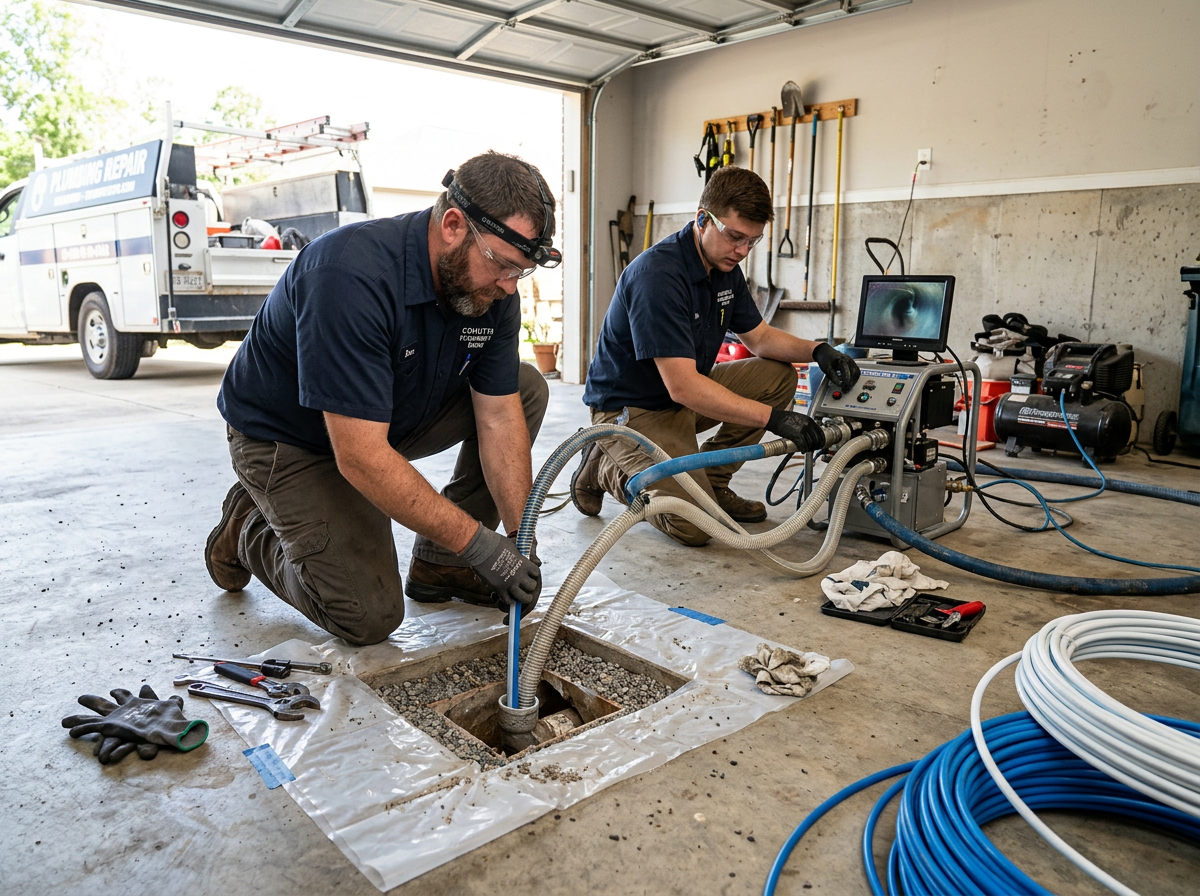
Not every slab leak needs a jackhammer through the middle of the kitchen. Depending on where the pipe runs and what it's made of, a leak can sometimes be repaired with little or no concrete removed inside the house.
The trenchless options
Pipe pull-through. Where the old pipe runs in a clear path, a new line can sometimes be pulled through along the same route, replacing the damaged section without opening the slab along its length.
Tunnelling from outside. Instead of breaking the floor from above, a tunnel is dug under the foundation from outside the house to reach the leak from below. The work stays out of the living space, which can spare finished flooring, cabinets and built-in showers.
When trenchless makes sense
- The leak is under cabinets, a shower or expensive flooring
- The pipe route is suitable for pulling a new line
- The leak is close enough to an outside wall to tunnel to
- You want to keep the work out of the house
When it doesn't
Trenchless isn't possible for every leak. Pipes that turn sharply, run deep under footings, or are made of material that can't be pulled through may rule it out. In red clay, tunnelling takes careful planning and shoring. Whether it's an option is decided only after the leak is located.
How it compares
A direct repair through the slab is often simpler when the leak is under an open floor. A reroute avoids the slab entirely and suits older homes with repeat leaks. Trenchless sits between the two: it repairs the original line without opening the floor inside.
All three start with slab leak detection.
Call for a quote to find out if trenchless [slab leak repair](/) suits your home.
Trenchless Slab Leak Repair Services We Offer
✓Pipe Pull-through
New line pulled along the path of the old one.
✓Exterior Tunnelling
Access from outside the foundation.
How it works
- 1
Locate
Leak pinpointed and pipe route traced.
- 2
Assess
Route, depth and material checked for trenchless.
- 3
Access
Pull-through or exterior tunnel.
- 4
Test and restore
Line pressure-tested; tunnel backfilled.